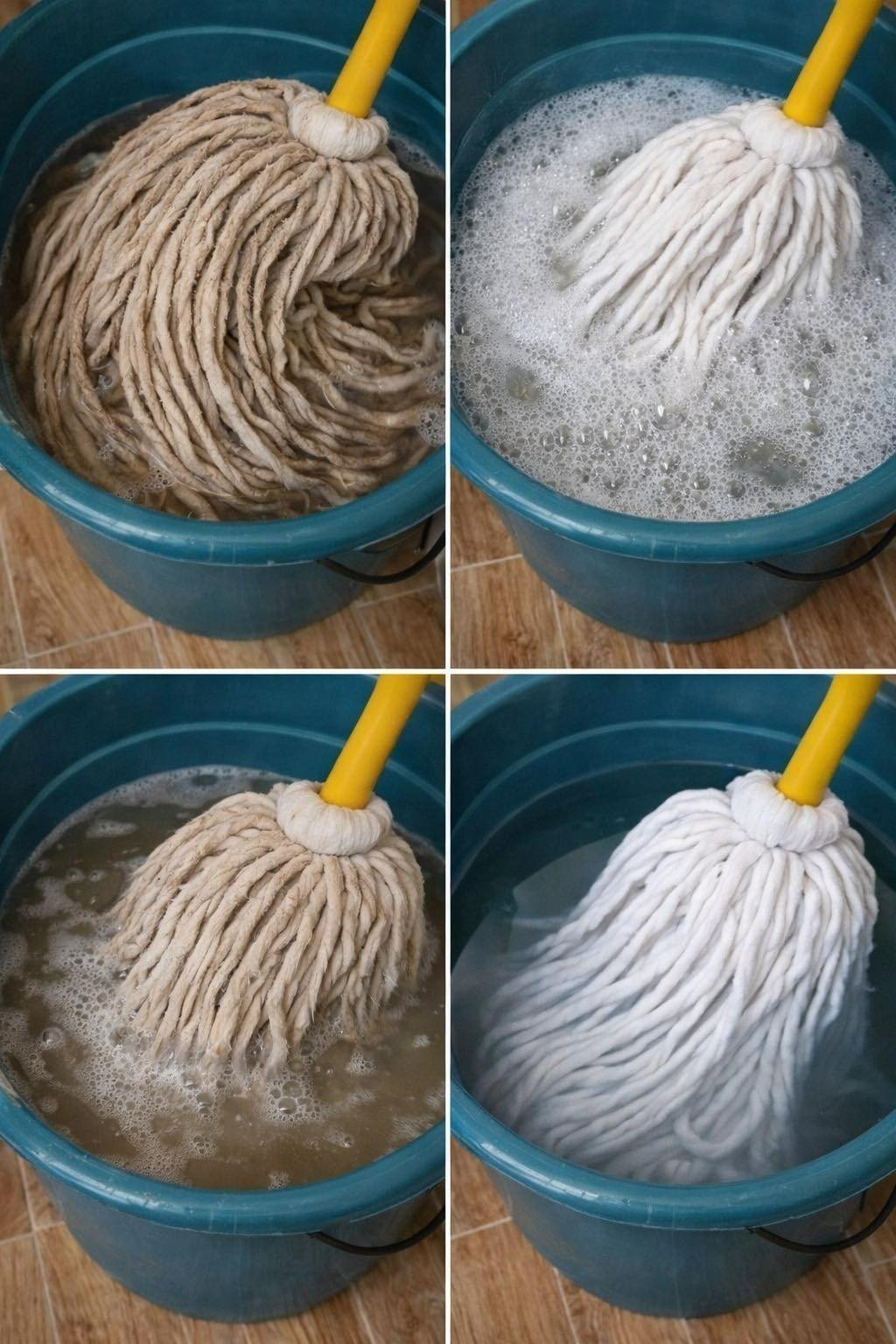
Very Dirty Mop? Don’t Throw It Away – One Simple Ingredient Can Make It Like New
That trusty mop works hard to keep your floors clean—but when was the last time you cleaned the mop itself?
Over time, mop heads collect far more than dust and dirt. They absorb moisture, food particles, grease, and bacteria. If you keep using a dirty mop, you may actually be spreading germs and unpleasant odors across your floors instead of cleaning them.
The good news is that most mops don’t need to be replaced. With a simple cleaning trick and a common kitchen ingredient, you can refresh even a heavily soiled mop in less than an hour.
Why Mop Hygiene Matters
A mop is designed to trap dirt and liquids, which means it also becomes the perfect place for bacteria and mildew to grow if it isn’t cleaned regularly.
When a mop stays damp for long periods, it can develop:
Bacteria and germs
Mold and mildew
Unpleasant odors
Sticky residue that spreads across floors
If the mop head is dirty, every time you mop you’re essentially redistributing grime around your home.
Regular cleaning keeps the mop effective, hygienic, and usable for months longer.
The Secret Ingredient: White Vinegar
The ingredient that can completely revive a dirty mop is distilled white vinegar.
This simple pantry staple is surprisingly powerful when it comes to cleaning.
Why vinegar works so well
Naturally antibacterial – helps eliminate many household germs
Cuts through grease and grime
Neutralizes unpleasant odors
Breaks down mineral deposits from hard water
Eco-friendly and inexpensive
When used as a soaking solution, vinegar penetrates the fibers of the mop and dissolves the buildup that causes dirt and smells.
Method 1: Deep Cleaning Removable Mop Heads
If your mop head can be removed and washed, this method works best.
What you need
Hot water
1 cup white vinegar
¼ cup baking soda (optional)
A small amount of laundry detergent
Steps
Remove the mop head if possible.
Rinse it under hot water to remove loose dirt and debris.
Fill a bucket or sink with hot water and 1 cup of white vinegar.
Add a small squirt of laundry detergent.
Place the mop head in the solution and let it soak for 30–60 minutes.
For very dirty mops, add ¼ cup baking soda to boost the cleaning power.
Scrub gently with your hands or a brush.
Rinse thoroughly until the water runs clear.
Wring it out completely.
Let it air dry in a well-ventilated area.
Never store a mop while it’s still damp, as this encourages bacteria and odors.
Method 2: Cleaning Sponge Mops
Sponge mops also benefit greatly from a vinegar soak.
What you need
Hot water
1 cup white vinegar
1 tablespoon dish soap
Steps
Rinse the sponge under hot water.
Fill a bucket with hot water, vinegar, and dish soap.
Submerge the sponge and let it soak for about 30 minutes.
Squeeze and release the sponge repeatedly to push the cleaning solution through it.
Rinse thoroughly with clean water.
Wring it out and allow it to dry completely.
Extra Tips to Keep Your Mop Fresh Longer
Rinse the mop thoroughly after every use.
Allow it to dry upright in open air.
Deep clean it once every 1–2 weeks.
Replace the mop head only when fibers become worn or frayed.
A Simple Trick That Saves Money
Instead of buying a new mop every time it starts to smell or look dirty, try this simple vinegar cleaning method first. In most cases, a good soak will remove grime, eliminate odors, and restore your mop to a fresh, usable condition.
With just a little care—and one powerful kitchen ingredient—you can keep your mop working like new while saving money and reducing household waste.