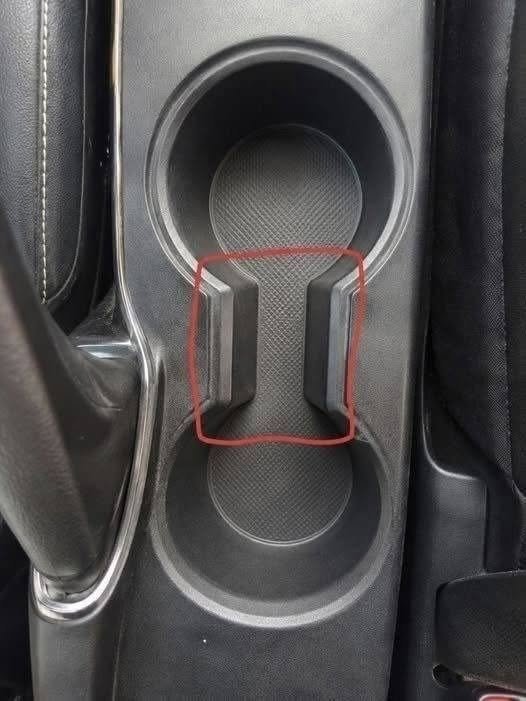
Durante años, pensé que esa ranura estrecha entre los portavasos de mi coche era solo una peculiaridad del moldeado de plástico—un diseño añadido sin un propósito real. Ya sabes cuál: ese divisor delgado y algo incómodo que está entre dos pozos de bebida, demasiado pequeño para un teléfono, demasiado raro para monedas y aparentemente inútil para cualquier cosa.
Lo ignoré. A veces metía un paquete de chicle ahí. De vez en cuando, mi móvil. Una vez, incluso intenté equilibrar mis llaves en él—una decisión que terminó exactamente como cabría esperar en un giro brusco.
También te puede interesar


Entonces, un día, mientras navegaba por internet, me topé con un comentario que lo cambió todo: Esa tragaperras misteriosa realmente tiene un propósito.
De repente, empecé a notarlo por todas partes: en SUVs, berlinas, camiones, coches de alquiler, incluso en el Honda de mi amigo, que tenía una década de antigüedad. Ese pequeño “fallo de diseño” no fue nada aleatorio. Y cuando un exdiseñador de automóviles finalmente me explicó su verdadera función, no podía creer que hubiera pasado décadas sin saberlo.
Porque resulta que ese extraño pequeño hueco es en realidad una de las características ocultas más inteligentes que se han incorporado en el interior de un coche.
¿Para qué sirve realmente ese vacío?
La estrecha ranura entre los portavasos está diseñada para sujetar los asas de las bolsas de la compra —o las correas del bolso— mientras conduces.
Yes, seriously.
Instead of letting shopping bags slide across the passenger seat or spill onto the floor, the handles slide directly into that center slot, allowing the bag to hang securely between the cup holders. It keeps groceries upright, prevents drinks and fragile items from tipping, and stops everything from shifting every time you brake or turn.
Once you know this, you’ll never look at your center console the same way again.
Why This Hidden Feature Is Actually Genius
If you’ve ever driven home with groceries balanced precariously on the passenger seat, you already know the struggle. Car interiors weren’t originally designed with grocery runs in mind—until someone realized the unused space between cup holders could solve the problem perfectly.
Instead of adding bulky hooks, extra compartments, or complicated mechanisms, designers used a space that already existed.
Simple. Invisible. Brilliant.
How the Grocery Bag Holder Actually Works
The feature is surprisingly elegant once you understand the design logic. Most vehicles with dual cup holders include:
Two round cup wells sized for standard beverages
A narrow, reinforced slot or divider between them
An opening that extends downward, creating a secure anchor point
That center gap is engineered to support lightweight shopping bags by their handles. The weight of the bag creates natural tension, keeping the handles snug in place without slipping.
How to Use It (It’s Easier Than You Think)
Take your grocery bag by the handles.
Slide the handles through the gap between the cup holders.
Let the bag hang naturally below the console.
Drive normally—your groceries stay upright, secure, and spill-free.
That’s it. No more balancing bags on seats, no more chasing escaped oranges across the floorboard.
Why Most Drivers Never Notice This Feature
Honestly, this may be one of the biggest automotive design secrets hiding in plain sight.
Car manufacturers rarely explain it. It’s not marketed as:
A luxury upgrade
A safety innovation
A tech-forward feature
So people assume it’s just part of the plastic design. And because the slot blends so seamlessly into the console’s aesthetic, most drivers never stop to question it—until someone points it out. Then, suddenly, it becomes impossible to unsee.